


2020 Greenville Elections Voter Guide
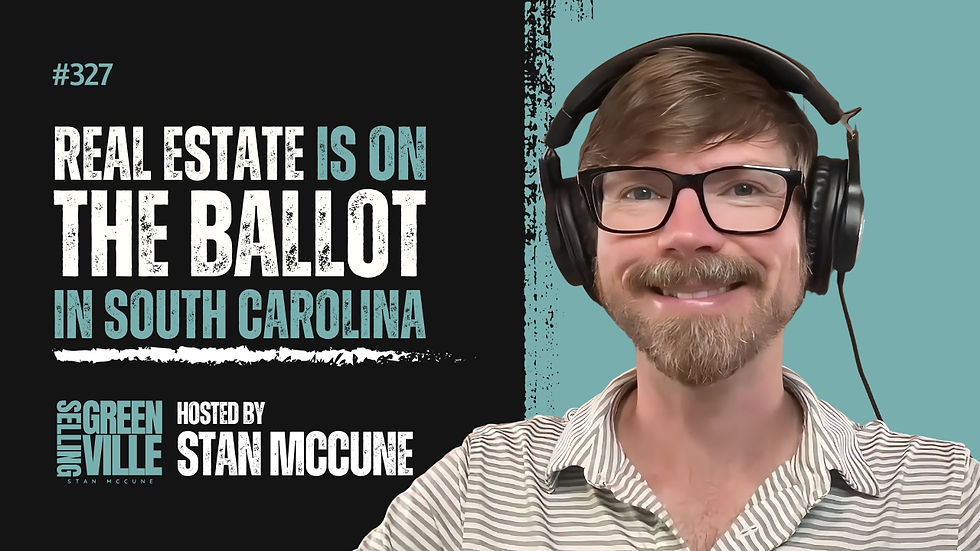
Local elections shape daily life far more than the headlines suggest. From zoning and infrastructure to policing and housing affordability, the choices on Greenville ballots ripple into neighborhoods, commutes, and wallets. This episode of Selling Greenville lays out a practical look at the 2020 races—from County Council to State House and on to Congress—focusing on what directly touches residents in the Upstate.

2020 Elections Voter Guide
This 2020 Elections Voter Guide distills the episode’s takeaways into one readable overview: why local races matter, what offices are in play, and how the candidates show up on issues such as development, roads, housing affordability, and day-to-day governance. Where the host has firsthand experience—interviews, meetings, and committee conversations—those observations inform the lens; where information is thinner, the guide simply notes it and moves on.

Why the smallest circles on your ballot often matter most
When someone breaks into a house, no one calls Washington; they call the sheriff. That’s the essence of the episode’s argument: city and county leaders have the most direct impact on residents’ lives. The guide touches the presidential and U.S. Senate races, but the bulk sits where the rubber meets the road—County Council, sheriff, and state legislature—because those are the officials who affect infrastructure, development pace, affordability, inspections, and the everyday mechanics of living and doing business in the Upstate.
Pro tip from the episode: to see exactly who’s on your ballot, search online for a sample ballot for your locality (e.g., “sample ballot Greenville South Carolina”), then enter your info to pull the real lineup you’ll see at the polls.
County Council: Development, affordability, and district-level priorities
District 20 — Steve Shaw (R) vs. Ferris Steel Johnson (D)
The episode notes an interview with Steve Shaw and a lack of response from Ferris Steel Johnson to a committee’s request. Shaw’s background spans law, urban planning, and real estate—multiple degrees, but a notably down-to-earth presentation. The emphasis: let markets guide development while enabling it through smarter, lighter-touch regulation. The episode’s takeaway: a conservative, data-minded approach that aims to ease barriers for building (important in an affordability crunch) without “throwing the baby out with the bathwater.”
District 22 — Stan S. (R) vs. Samantha Wallace (D)
Two sharply contrasting styles emerge. Stan S. is described as charismatic, humble, rooted, and networked—light on specifics in the interview but tuned in to housing affordability and infrastructure. Samantha Wallace presents as detail-oriented and process-driven (even taking notes during the interview), with deep involvement in local businesses and nonprofits. Her focus leans toward countywide strategy and managing growth speed; the episode raises questions about how that pairs with affordability solutions when those aims can collide.
District 24 — Liz Seman (R, incumbent) vs. Amanda Scott (D)
Seman brings lengthy Council experience and peer respect, answering in big-picture terms and understanding both limits and leverage of the seat. Scott’s interview (per the episode) emphasized meta-political and social issues more than district specifics, with affordable housing later added to her site. The guide’s tone: for Council’s practical purview—roads, affordability, infrastructure—experience and focus matter.
District 25 — Andis Fant (D, incumbent) vs. Ben Carper ®
Fant is a current realtor, relentlessly district-focused, and unapologetically vocal in advocating for historically underserved areas—including granular goals like recruiting a needed grocery store and backing it with data. The episode flags communication and process concerns with Carper (around interview scheduling/clarity). Net: a strong case for the value of a district champion, even if occasionally contrarian on council.
District 27 — Butch Kirven (R, chair) vs. Will Morren (D)
Kirven’s long tenure, command of issues, and district results (think Five Forks growth) stand out. Not every decision thrilled pro-development voices, but the episode frames several as responsive to constituent will. Recent disagreement over county mask mandates is noted; still, the guide sees continuity at the chair as stabilizing in a complex season.
Sheriff: Stability and on-the-ground leadership
Hobart Lewis (R, incumbent) vs. Paul Guy (D)The episode credits Hobart Lewis with steady leadership in protests and social tensions, plus internal support among deputies—restoring stability to a role that needed it. The short version: if residents value department steadiness and a measured public posture, that’s what Lewis represents in this cycle.
South Carolina Senate: Practical reform vs. social focus (two races in view)
District 6 — Dwight Loftis (R, incumbent) vs. Hao Wu (D)
Loftis brings decades of experience in the House and Senate, firmly conservative on social issues. A personal anecdote raises a courtesy concern (masking while feeling under the weather), but the political résumé is the crux. Hao Wu, a veteran and real estate/entrepreneurship figure with a track record of supporting homeless veterans, frames himself as pragmatic rather than ideologically rigid, seeing merits in ideas on both “sides.” The guide highlights Wu’s real-estate literacy and service background as relevant to Upstate priorities.
District 12 — Scott Talley (R, incumbent) vs. Dawn Bingham (D)
Talley’s calling cards: transparency/ethics, DOT reform, and practical revitalization (like mill projects). Bingham, an OB-GYN, centers women’s issues and broader social planks (pay equity framing, climate, etc.). The episode’s lens: for a chamber tasked with roads, redevelopment, and state-level nuts-and-bolts, Talley’s focus aligns closely with immediate Upstate needs.
South Carolina House: Roads, taxes, and reform (two races highlighted)
District 18 — Tommy Stringer (R, incumbent) vs. Benjamin Smith (D)
Stringer has served since 2009, with significant health disclosures and a record including support for the state gas tax—passed to fix roads but, in the episode’s view, under-delivered on visible improvements. His emphasis on social issues is noted. Benjamin Smith’s campaign is smaller and emphasizes roads, teacher pay, and hate-crime legislation. The guide reads this as a change-vs-continuity choice, with roads and everyday governance at the center.
District 22 — Jason Elliott (R, incumbent) vs. B.K. Brown (D)
Elliott, a conservative attorney with experience under Jim DeMint, has been accessible and reform-oriented (government process, roads, infrastructure). Past attempts to turn his identity into politics didn’t transform his voting posture; the focus remained on function and fixes. No additional detail is provided on B.K. Brown in the episode.
U.S. House of Representatives: Two Upstate seats
District 3 — Jeff Duncan (R, incumbent) vs. Hosea Cleveland (D)
Duncan is a Tea Party conservative with strong stances on social issues and gun rights; he’s supported measures like repealing the federal income tax and troop withdrawals from Syria. Cleveland presents a moderate Democratic platform and is explicitly pro-term-limits, promising not to overstay if elected. The episode stops short of a firm endorsement here, recognizing legitimate pulls in both directions depending on a voter’s priorities.
District 4 — William Timmons (R, incumbent) vs. Kim Nelson (D)
Timmons serves in the SC National Guard, owns local businesses, and has pushed to modernize Congress via a bipartisan committee—seeking a legislature that functions and a presidency with less overreach. The guide frames this as humble, accessible, process-repair work that fits a district wanting results.
U.S. Senate and Presidency: The shortest takes
U.S. Senate — Lindsey Graham (R, incumbent) vs. Jamie Harrison (D)
The episode’s history: skepticism of Graham’s record, admiration for Harrison’s skill and moderate tone—yet a reluctant nod to Graham this cycle due to concerns over potential Senate rules changes (court-packing, ending the filibuster) if control flipped. The reasoning is procedural, not personal.
President — Donald Trump (R) vs. Joe Biden (D) (and Jo Jorgensen, Libertarian)
The episode declines both major-party nominees. The critique: division and policy concerns on one side; a long, problematic legislative record and a likely handoff to Harris on the other—expected to mirror divisiveness. The likely vote is for Jo Jorgensen, a Greenville-based Libertarian, as an alternative focused on limiting government power rather than consolidating it.
How to use this guide (and what it isn’t)
This 2020 Greenville Elections Voter Guide relays the episode’s firsthand interviews, impressions, and practical considerations. It’s not a comprehensive research brief on every name and measure; rather, it’s a field-level snapshot of what matters most for Greenville’s day-to-day: affordability, infrastructure, competent process, and leaders who actually answer the phone. Where specifics are missing, the episode recommends checking your sample ballot and doing a quick, targeted review.
Watch Or Listen To The Selling Greenville Podcast
Subscribe to the Selling Greenville podcast for real-time insights, bold perspectives, and unfiltered takes on the Upstate housing scene. Whether you’re buying, selling, or simply watching the market unfold—this is where Greenville goes to stay informed.
Bottom Line
Ballots are crowded, but the offices closest to home move the needle most. County Council determines how (and how fast) Greenville grows—and whether affordability keeps pace. The sheriff sets the tone for safety and public trust. State legislators decide whether roads get fixed, and rules make sense for building and redevelopment. In Congress, process matters as much as policy. Read your sample ballot, decide what you value most (affordability, infrastructure, stability, reform), and vote with your everyday life in mind.
Ien Araneta
Journal & Podcast Editor | Selling Greenville


Comments