


How To Get Your PMI Dropped YEARS Ahead of Schedule
Private mortgage insurance (PMI) is the quiet fee that lingers long after closing—protecting the lender, not the homeowner. In a recent Selling Greenville episode, the host laid out, step by step, how he cut that cost years early, saving roughly $60 a month (about $700 a year) for the next four years—all by getting his lender to re-check today’s value of his home instead of waiting for the slow grind of a 30-year amortization schedule.
What follows is a practical, Greenville-tested playbook drawn entirely from that experience: how PMI works, why today’s equity jump makes early removal possible, and exactly how he navigated the lender’s maze to win the decision.

Remove PMI Years Early (without refinancing)
That long-tail focus phrase—remove PMI years early—captures the goal of the episode: use current market value to prove you’ve crossed the 20% equity line sooner than your amortization schedule suggests. The host expected his PMI to last until 2026. Instead, he got it dropped now.
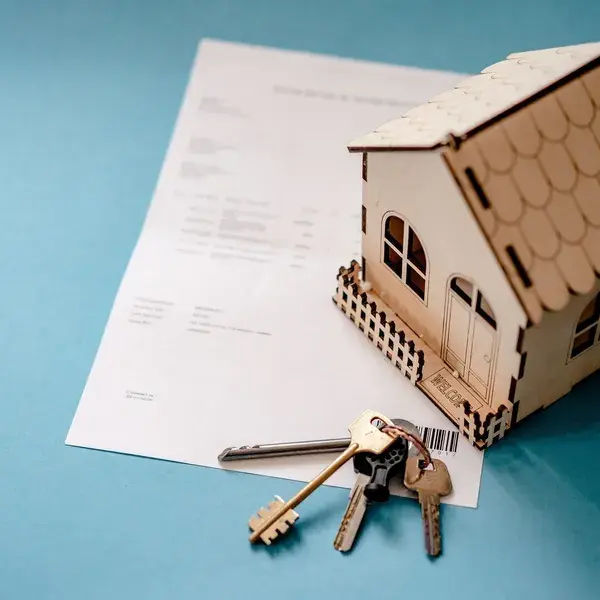
PMI in one page: what it is and when it goes away
What PMI is: An extra insurance premium added to many loans when a buyer puts less than 20% down. (Some loans label the fee differently—e.g., MIP—but the effect is similar.)
When it’s eligible to be removed: Once the loan hits 80% loan-to-value (LTV)—that is, when the homeowner has 20% equity.
The catch: Lenders don’t have to remove it automatically at 80%. They must drop it automatically at 78% LTV (about 22% equity). If no one asks, homeowners can overpay for months—or years.
Why this matters: on a standard 30-year mortgage, early payments are mostly interest, so it can take a long time to reach 20% equity by amortization alone—especially for buyers who started with 3.5%–10% down. That’s where the past year’s big price gains change the math.
Why early PMI removal is realistic right now
The host noted that many Greenville neighborhoods saw values rise roughly 20% year over year. He had originally put 10% down and later refinanced; his servicer estimated PMI would hang on until 2026. But given how quickly surrounding sales had climbed, he suspected his equity had already crossed 20%—years ahead of schedule—and decided to test it.
The exact process he used (Greenville case study)
1) Call the current servicer and request PMI removal
He phoned the main line for his mortgage servicer (his loan had been sold a few times—normal). After a transfer and a long hold, a representative initiated a review and said the next step would arrive by email or mail within about ten business days.
2) Watch the mailbox closely
He receives constant marketing mailers urging him to refinance, but the real PMI letters looked totally different—plain black-and-white envelopes, low frills. Using USPS Informed Delivery, he opened everything from the servicer so he wouldn’t miss the legitimate notice.
3) Expect vague instructions—and read twice
The first letter said to return a completed form plus a fee to start the valuation, but it didn’t clearly specify who to make the check out to, where exactly to send it, or alternate payment options. He addressed the check to the entity named on the letterhead and mailed it to the return address—then waited.
4) Pay for a BPO, not a full appraisal (in his case)
Instead of ordering an appraisal, the servicer required a Broker’s Price Opinion (BPO)—a valuation prepared by a licensed real estate professional. It cost $105 (less than a typical appraisal). Once his check cleared, a local agent called, scheduled quickly, took photos, and finished the BPO. No laser measures, no 3D scan—just documented condition and market perspective.
A note from his experience: he owns a basement home. In his words, South Carolina appraisers often undervalue basements, while local agents better understand how scarce finished basements are in the Upstate—and how many buyers specifically want them. In this situation, a BPO helped the market story show up clearly.
5) Wait out the paper trail
He received a few delayed, boilerplate letters (“we received your request,” “we received your BPO payment,” etc.). Then the decision arrived: approved. PMI: removed.
6) The savings were immediate and multi-year
His monthly payment dropped by about $60. Over four years, that’s roughly $2,800–$3,000 he won’t spend on lender insurance.
What this proves—and who should try it
If you bought 18+ months ago and still pay PMI, you may have crossed 20% equity thanks to appreciation—even if you started with a small down payment.
Even some who purchased about a year ago could be close. It’s less certain, but the host says it may still be worth asking the servicer to check.
Worst case: you’re out the BPO fee (in his case, $105) and get a denial.
Best case: you remove a line item from your mortgage bill years early.
He stressed that lenders don’t make this easy. The letters can look like junk mail, the directions can be muddy, and many servicers would rather convince you to refinance than drop a fee. But as his experience shows, persistence pays—especially in neighborhoods where values jumped.
Understanding the 20% vs. 22% wrinkle
A key point from the episode: eligibility and automatic removal are not the same.
At 20% equity (80% LTV), many borrowers are eligible to request PMI removal.
At 22% equity (78% LTV), many servicers must automatically remove it.
If no one asks at 80%, homeowners can end up overpaying until the loan naturally reaches 78%—which, on a 30-year schedule, can take much longer than most realize.
Why a straight refinance wasn’t the answer here
The servicer constantly mailed him glossy offers to refinance—proof that their automated systems also believed the home was worth much more. But refinancing wasn’t the goal. He wanted to drop PMI and keep his existing loan. The PMI-removal route accomplished exactly that, with no new loan and a simple BPO instead of a full appraisal.
A Greenville-specific wrinkle: basements and valuation
One detail he highlighted: finished basements are relatively rare in the Upstate, yet very popular among buyers. He’s seen appraisals discount basement space, while local agents better recognize the demand. In his case, having a local broker perform the opinion helped reflect how buyers actually value that feature in his neighborhood.
Practical checklist (modeled on the episode)
Call your servicer and ask about PMI removal criteria.
Request a value review based on current market conditions.
Open all mail from the servicer—especially plain, non-glossy envelopes.
Follow the instructions exactly (return the form and fee).
Complete the BPO or appraisal access quickly when they reach out.
Wait for the decision, then confirm your new payment once PMI is removed.
He emphasized that the entire lift was modest: a phone call, a small fee, a 10-minute photo visit, and a few weeks of mail watching—trivial compared to four more years of unnecessary PMI.
Need a sanity check on equity?
In the episode, he offered to help Greenville-area homeowners sanity-check whether their neighborhood comps likely support 20% equity today. He noted it’s easiest in subdivisions with clear recent sales and trickier with unique properties. (His contact information lives in the show notes of the podcast.)
Watch Or Listen To The Selling Greenville Podcast
Subscribe to the Selling Greenville podcast for real-time insights, bold perspectives, and unfiltered takes on the Upstate housing scene. Whether you’re buying, selling, or simply watching the market unfold—this is where Greenville goes to stay informed.
Bottom Line
PMI is not a forever fee. In a market where many Greenville homes jumped in value, it’s entirely possible to remove PMI years early—without refinancing—by asking your servicer to verify today’s value. The host did exactly that: paid $105 for a BPO, navigated some clunky paperwork, and knocked $60 off the monthly payment for the next four years. If you bought 18+ months ago (or even about a year ago) and still see PMI on your statement, it may be the simplest money you’ll “earn” this year—just by not spending it.
Ien Araneta
Journal & Podcast Editor | Selling Greenville


Comments