


Real Estate Is on the Ballot in South Carolina
Greenville’s housing conversation has officially wandered out of open houses and into the voting booth.
For years, it’s been easy to treat “politics” like background noise and real estate like the main event. But the Upstate is bumping into a new reality: the decisions happening at the state and local level are starting to show up in everyday housing choices. What gets built, what it costs, where it gets built, how it’s taxed, and how neighborhoods change all trace back to policy choices that are very much alive right now.
And that’s why Real Estate Is on the Ballot in South Carolina.
This isn’t about red versus blue. It’s about how growth gets managed, how roads get paid for, what happens to affordability when development slows, and why a single policy tweak can ripple all the way down to a buyer’s monthly payment. In other words, this is the kind of ballot that quietly changes what “home” costs.
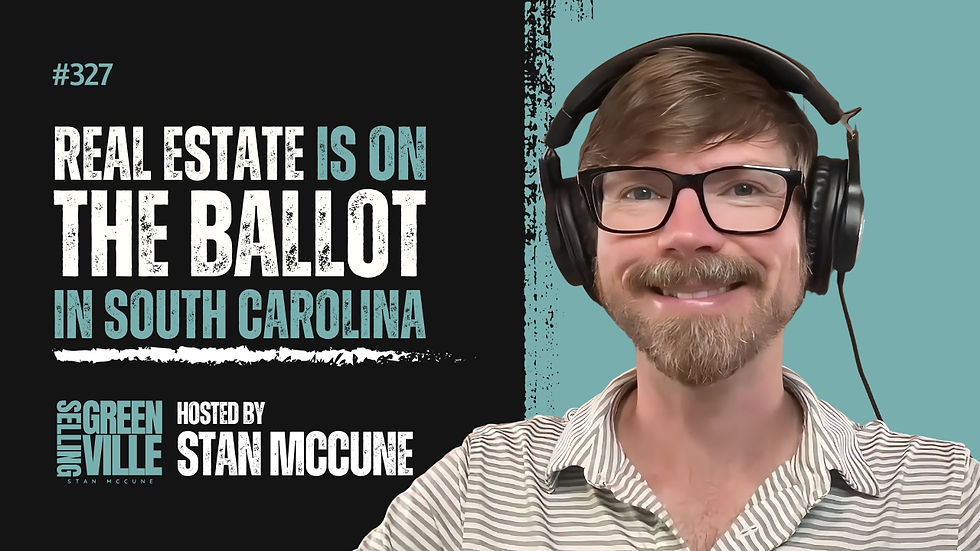
Why Real Estate Is on the Ballot in South Carolina Right Now
South Carolina’s primaries can shape Greenville’s housing future in ways that go far beyond campaign signs. The big-ticket issues are practical ones: roads, growth, development rules, impact fees, short-term rentals, property taxes, and housing affordability.
Greenville doesn’t exist in a bubble, either. The Upstate’s momentum is real. But so is the friction that comes with it. And lately, that friction has gotten louder.

Roads, Infrastructure, and the “Everyone Wants It, Nobody Wants to Pay for It” Problem
Infrastructure has become the universal language of frustration. People want smoother roads, less congestion, better planning, and fewer “surprise” developments that dump traffic onto roads that already feel maxed out.
At the same time, South Carolina’s Department of Transportation is described as overwhelmed and backed up for years. That’s why the conversation keeps circling back to funding.
Greenville County’s penny sales tax proposal is part of that story. The pitch was straightforward: a dedicated revenue stream to tackle infrastructure. The pushback was also predictable: “No more taxes.” The tension is that many of the roads most people complain about aren’t getting fixed quickly under the current setup, which is why the idea of creating a reliable funding lane (pun fully intended) keeps resurfacing.
The underlying point is hard to ignore: infrastructure doesn’t magically appear. It’s either funded intentionally or “funded” through longer commutes, more wear and tear, and growth that outpaces the basics.
Growth vs. Affordability: The Argument Nobody Escapes
Greenville’s growth debate often sounds like a simple slogan battle: “Stop building” versus “Keep building.”
But the housing market doesn’t respond to slogans. It responds to supply and demand.
When development slows, inventory tightens. When inventory tightens, but demand stays strong, prices rise. And as prices rise, more households get priced out. That’s the uncomfortable math behind why the “slow growth” crowd and the “affordability” crowd often end up arguing while accidentally describing the same problem from different angles.
Greenville has already seen how fast pricing can move. There’s been a sharp rise over the last few years, and when county leaders talk about limiting development, it directly intersects with affordability. If fewer homes are built while more people want to live here, the market doesn’t politely pause. It climbs.
The irony is that even people who dislike growth often dislike the consequences of restricted supply even more. Nobody wants Greenville to feel like it’s “for sale” to the highest bidder only, but that’s exactly where housing trends can drift if inventory stays constrained.
Impact Fees: The “Hidden Price Tag” in New Construction
Impact fees keep getting floated as a solution for growth-related strain, especially for infrastructure. In theory, it’s a fee imposed on developers when they build new subdivisions and lots, meant to help fund what growth requires.
In practice, impact fees have a habit of showing up later as a higher price tag for the buyer.
The concern raised is that an impact fee doesn’t stay neatly contained. A fee charged upstream often becomes a much higher cost downstream, especially once it travels through the pricing chain and hits the final buyer. And that matters because many buyers aren’t shopping with a huge margin. They’re shopping near the edge of what they can qualify for.
This is where the political argument turns into a real-world affordability issue. If the goal is to keep housing attainable, policies that raise the cost of new homes (even indirectly) can end up working against that.
Short-Term Rentals and the Accommodations Tax Conversation
Short-term rentals have become a lightning rod. The feelings around them are rarely mild, and policy conversations are heating up accordingly.
One proposal getting attention is an accommodations tax applied to short-term rentals. The logic some people use is that owners of these properties have money and should be taxed more. Others argue that raising taxes could push certain properties back into the resale market, potentially increasing inventory.
But there’s also a more personal layer to this debate: some owners intentionally avoid city limits and HOAs specifically to preserve the ability to use their property as they choose. For them, a new tax feels like a shifting goalpost.
There’s also the bigger reality that local rules vary dramatically depending on where a property sits. Cross an invisible line on a map, and the rules can change. That’s why this topic keeps drifting back into the “who controls what” debate: should the city decide, the county decide, or the state?
The short-term rental issue isn’t just about rentals. It’s about property rights, local control, and how regulation can reshape investor behavior and housing supply.
Property Taxes and the Homestead Exemption: Relief, Confusion, and Timing
Property taxes are one of the most emotionally charged parts of homeownership because they’re the bill that shows up even after the mortgage feels “handled.”
South Carolina’s homestead exemption expansion has been part of that discussion. The idea is simple: reduce the tax burden for qualifying homeowners, especially seniors, and make homeownership more sustainable long-term.
And here’s the update that needs to be part of the conversation:
“SC is expanding the homestead exemption, which was widely expected to be signed into law, but since recording, this bill has not yet been passed and may not pass this year.”
That one sentence matters because it changes expectations. People plan around tax relief. Buyers factor in future costs. Homeowners' budget based on what they think is coming. When a widely expected bill stalls, it doesn’t just delay relief. It adds uncertainty, and uncertainty tends to make people hesitate.
The Bigger Thread: Affordability Is the Real Ballot Measure
You can talk roads, rentals, taxes, and development rules separately, but they all funnel into one question:
Can the average household still afford to live here?
That’s the pressure point. Even small shifts in policy can compound. A new fee here, a new restriction there, a tax change that doesn’t happen when people expected it to, and suddenly the market feels less predictable and more expensive.
And Greenville is sensitive to these swings because it’s still seen as an “affordable” destination compared to larger markets. If policy choices weaken affordability, they don’t just inconvenience locals. They change the entire reason many people are moving here in the first place.
Watch Or Listen To The Selling Greenville Podcast
Subscribe to the Selling Greenville podcast for real-time insights, bold perspectives, and unfiltered takes on the Upstate housing scene. Whether you’re buying, selling, or simply watching the market unfold—this is where Greenville goes to stay informed.
Bottom Line
If the Upstate feels more expensive, more crowded, and harder to navigate, it’s not just “the market being weird.” It’s policy, priorities, and funding decisions showing up in daily life.
Infrastructure doesn’t fix itself. Housing doesn’t stay affordable by accident. And when leaders look for popular ways to raise revenue, real estate is usually the scoreboard.
So yes, Real Estate Is on the Ballot. And anyone making a move in South Carolina this year should pay attention to the issues driving the conversation—because those issues will eventually drive the numbers.
Ien Araneta
Journal & Podcast Editor | Selling Greenville


Comments