


South Carolina Is Cracking Down on Squatters and Rental Scams
South Carolina has long had a reputation for being a landlord-friendly state, and new legislation is strengthening that reputation even further.
The latest law takes aim at two growing problems: people illegally occupying vacant properties and scammers advertising homes for rent when they have no legal right to do so. Both issues create real problems for property owners, landlords, tenants, real estate agents, and even unsuspecting renters who are simply trying to find a place to live.
This is not about stripping rights from lawful tenants. Tenants still deserve protection, and the law includes penalties for property owners who try to misuse the process. The real target is criminal behavior: squatters entering properties without permission, fake leases being used to delay removal, and fraudulent rental listings designed to steal deposits from people who do not know they are being scammed.
For South Carolina property owners, this is a meaningful shift. The state is drawing a clearer line between tenant rights and criminal trespassing, and that line matters.

Why Squatters and Rental Scams Are Now a Bigger Legal Target in South Carolina
The focus on Squatters and Rental Scams comes at a time when property fraud has become easier to pull off and harder for everyday people to spot.
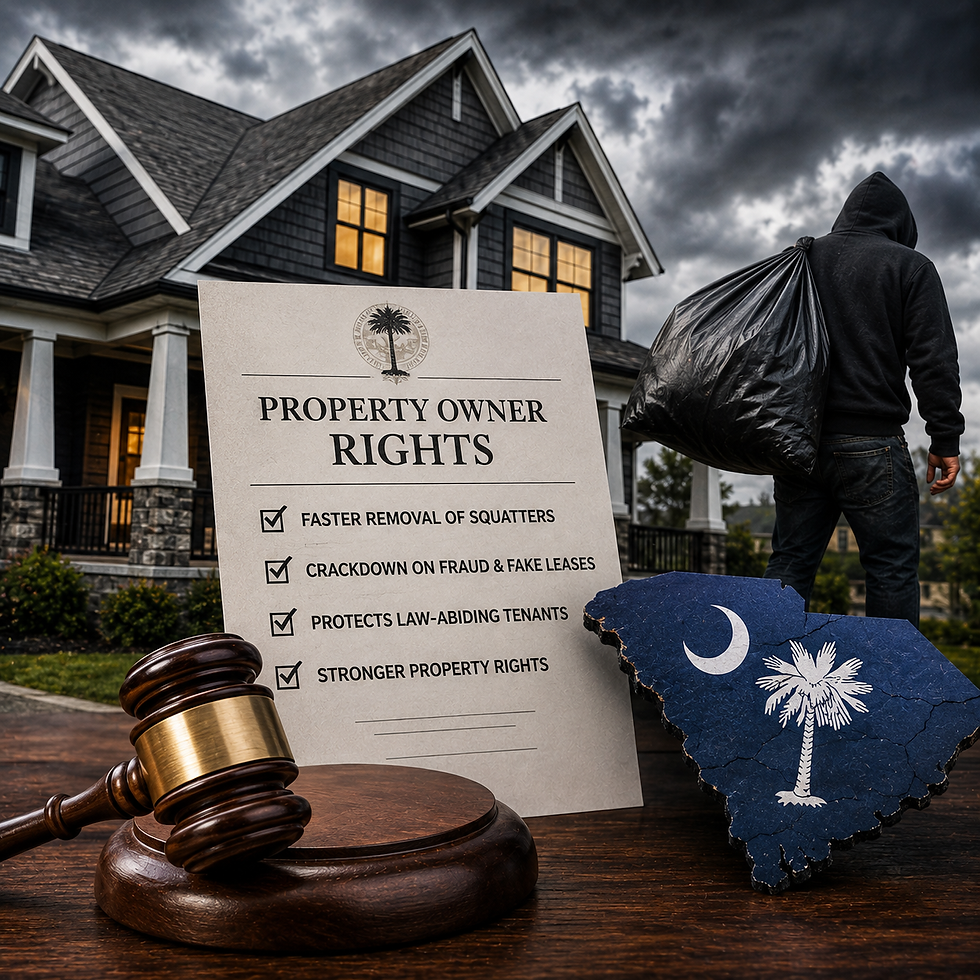
A vacant property can attract the wrong kind of attention quickly. Once someone illegally enters and refuses to leave, the situation can become frustrating and uncertain for the property owner. In some places, removing a squatter can turn into a long legal mess, especially if the occupant produces documents that appear official.
That problem has become worse because technology has made fake paperwork easier to create. Fraudulent leases can now be generated quickly and made to look legitimate. Someone illegally occupying a property can claim they have a lease, even if no actual agreement exists. That creates confusion for law enforcement, the courts, and the rightful owner.
South Carolina’s new law is meant to cut through that confusion faster.
If a property owner believes someone is unlawfully occupying a vacant property and there is no lease agreement, verbal or written, the owner can file a verified petition with a magistrate or clerk of court. The court can then issue an emergency removal order, and law enforcement can remove the unlawful occupant.
A formal hearing must take place within 24 hours of the filing. During that window, once law enforcement has acted, the owner can change the locks and move the squatter’s property to the property line while an officer stands by to keep the peace.
That is a much faster process than many property owners may have expected in the past.
Lawful Tenants Still Have Protections
One of the most important parts of this law is what it does not do.
It does not give landlords permission to remove lawful tenants just because they are frustrated, impatient, or tired of dealing with a difficult lease situation. If someone has a legitimate right to be in the property, this emergency process is not a shortcut around normal landlord-tenant law.
That distinction matters.
If someone is wrongfully removed without just cause, they can sue for restored possession, actual damages, and $1,000 in statutory damages, minus any property damage they caused. That creates a consequence for landlords or property owners who try to abuse the law.
In other words, the law gives owners a faster path when someone is truly squatting, but it also warns owners not to turn it into a weapon against lawful tenants.
That balance is important because tenant rights and property rights should not be treated like opposites. A lawful tenant deserves protection. A criminal squatter does not deserve a loophole.
Property Damage Can Now Carry Serious Consequences
The new law also increases consequences when an unlawful occupant damages a property.
If an unlawful occupant intentionally causes $1,000 or more in damage to a residential dwelling, that can become a felony carrying up to five years in prison.
That is a major point for property owners. Squatting is not always just someone sleeping in a vacant structure. Sometimes the damage can be significant. Floors, doors, locks, windows, fixtures, plumbing, wiring, and personal property can all become part of the mess left behind.
The law also makes it a felony to violate the terms of an ex parte squatter removal order. A person who ignores that order can face up to three years in prison and a $3,000 fine.
That sends a clear message: once the court and law enforcement have acted, returning to the property is not just “trying again.” It can become a serious criminal issue.
Fake Rental Listings Are a Growing Problem
The crackdown on Squatters and Rental Scams also addresses another problem that has been showing up more often: fake rental listings.
The scam usually works like this. A property that is actually listed for sale gets copied and advertised somewhere else as a rental. The scammer may steal listing photos, post them on a platform like TikTok or another social site, then push interested renters to Facebook messages, WhatsApp, or another private channel.
From there, the scammer asks for an application fee, security deposit, or first month’s rent.
The victim thinks they are securing a home. In reality, the person advertising the property does not own it, does not represent it, and has no legal right to rent it out.
South Carolina’s new law makes it a misdemeanor to advertise or lease a property for sale or rent knowing the person has no legal title or ownership. That can carry up to 30 days in prison, a $1,000 fine, or both.
That matters because these scams hurt more than property owners. They hurt renters, often people already under pressure to find housing quickly. A fake rental listing can cost someone money they may not have to lose.
Fake Leases Are Also Being Addressed
Another key part of the law involves fraudulent leases and deeds.
Knowingly presenting a fake lease or deed to remain on a property is now a misdemeanor that can carry up to one year in prison.
This is especially important because fake leases are one of the easiest ways for unlawful occupants to create confusion. If someone can produce a document that looks official, even if it is fraudulent, the situation may not feel simple at first glance.
The new law gives South Carolina a clearer way to treat that behavior as fraud, not just a paperwork dispute.
Why This Matters for Landlords and Investors
Rental property returns in South Carolina may not be what they once were. Years ago, investors could more easily hit the 1% rule, or even the 2% rule in some situations. Those numbers are harder to find now.
But laws still matter.
One reason South Carolina continues to appeal to real estate investors is that the legal environment tends to protect private property rights. Even if cash flow is tighter than it used to be, investors still look at the legal framework when deciding where to buy.
A state that makes it difficult to remove unlawful occupants can create major risk for landlords. A state that protects owners while still preserving lawful tenant rights creates a more stable environment.
That does not mean every rental property is automatically a great investment. Numbers still matter. Market rent still matters. Purchase price still matters. But private property protections are part of the equation, and this law strengthens that side of the ledger.
Private Property Rights Remain Central to South Carolina
The bigger theme here is private property.
South Carolina has had its share of debates over property rights, development, regulation, and government overreach. But this law represents a case where the state responded to real concerns from property owners, landlords, real estate professionals, and people dealing with fraud.
The same broader conversation has shown up in other areas, too, including efforts to address predatory wholesaling. The state has already moved against certain practices where people try to profit from properties they do not truly own or control in a way that harms vulnerable owners.
Now, the same spirit is showing up in laws around squatters, fake leases, and fraudulent rental ads.
The message is straightforward: private property matters, and people should not be able to use loopholes, fake documents, or online scams to undermine it.
Watch Or Listen To The Selling Greenville Podcast
Subscribe to the Selling Greenville podcast for real-time insights, bold perspectives, and unfiltered takes on the Upstate housing scene. Whether you’re buying, selling, or simply watching the market unfold—this is where Greenville goes to stay informed.
Bottom Line
South Carolina’s new law makes life harder for squatters, scammers, and anyone using fake leases or fraudulent rental ads to take advantage of property owners and renters.
It gives owners a faster removal process, adds real penalties for damage and fake documents, and still protects lawful tenants from abuse.
For landlords, investors, and honest renters, this is a clear win: private property rights are stronger, rental scams are being taken more seriously, and South Carolina is closing loopholes that never should have existed.
Ien Araneta
Journal & Podcast Editor | Selling Greenville


Comments