


Why people are LEAVING GREENVILLE, SC in 2025
Greenville’s story is usually told in one direction: a magnet city with waterfalls, restaurants, and momentum. But there’s another side to the cycle. Some residents pack up and move on, and their reasons say a lot about how life in the Upstate actually feels once the honeymoon wears off. From county-to-county tradeoffs to weather expectations, from affordability strain to the realities of downtown living, here’s an unvarnished look at why some folks decide their next chapter belongs somewhere else.

Why people are LEAVING GREENVILLE
A focused look at why people are LEAVING GREENVILLE starts with a simple pattern: many who exit aren’t leaving the Upstate entirely. They’re shifting their pin on the map to nearby counties, or to places that better match their climate, lifestyle, or budget expectations. Ten themes come up again and again.
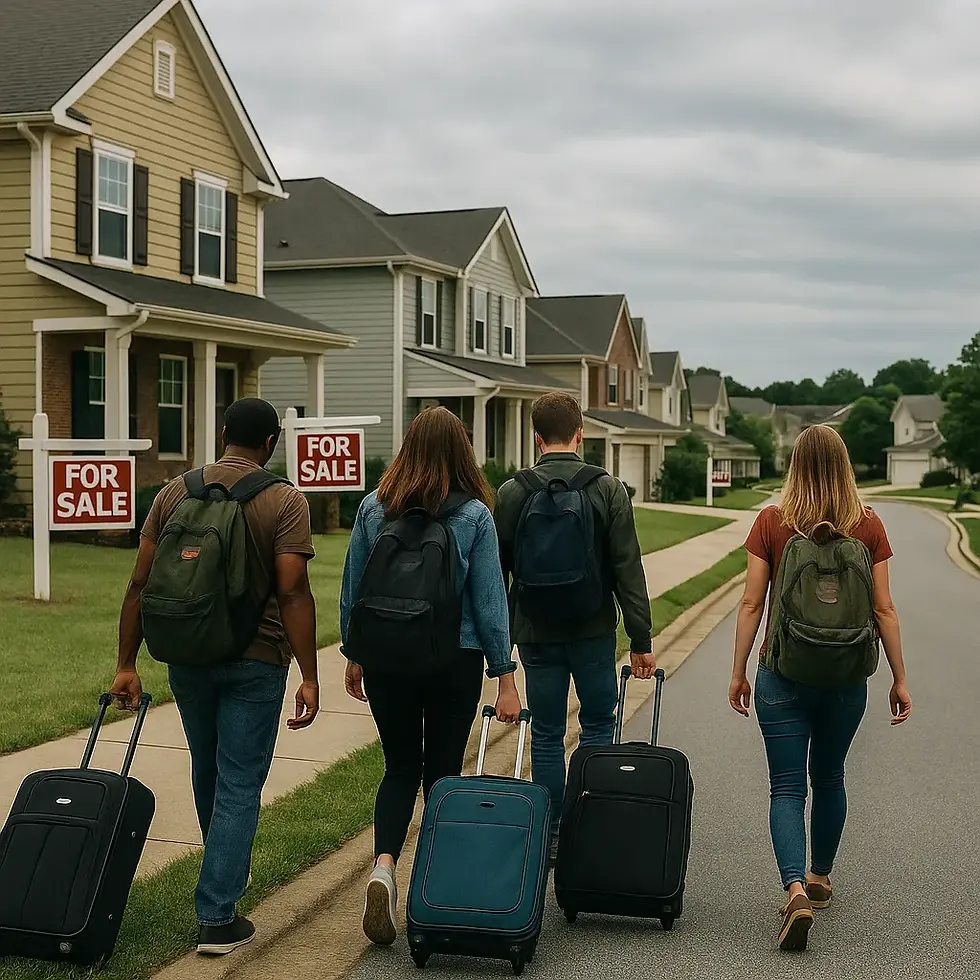
1) Trading Greenville County for Spartanburg or Anderson
A lot of movers head just down the road. Spartanburg County and Anderson County have felt that tailwind in a big way, with buyers citing lower home prices as the nudge. The gap matters. Greenville’s median pricing jumped fast in recent years, while neighboring counties lagged that surge. For many, the choice is practical: enjoy similar access to the region via I-85, keep downtown Greenville within an easy drive, and land in a neighborhood that fits the budget. Schools, parks, golf, and new businesses are all part of the draw, and several districts in those counties have the kind of reputations that make families target them on purpose.
2) Hurricane Helene aftershocks
Helene left a mark. Weeks-long power outages, rare flooding, and damaging winds pushed some residents to say, “Never again.” Context matters, though. Events like that are highly unusual for Greenville County, driven by a unique blend of saturated ground, storm track, and straight-line wind. Still, once you live through grid-down weeks, it can change what “home” needs to feel like. For a slice of residents, that meant leaving.
3) Weather preferences cut both ways
One person moves away because Greenville feels too hot. Another leaves because it isn’t cold enough. That contradiction is real. Some years bring short bursts over 100 degrees, other weeks dip into the teens, and snowfall that shuts down the town is far from guaranteed. Most months are mild and pleasant, but if you want regular snow days or zero interest in heat spikes, you might start looking elsewhere. Personal comfort wins.
4) Beaches vs. mountains and lakes
Greenville’s natural backdrop is mountains, lakes, and waterfalls. Think quick access to Paris Mountain, day trips north, and plenty of water nearby. For beach-first people, that vibe never quite substitutes for waves. If daily life isn’t complete without an ocean horizon, the choice often becomes simple: move closer to the coast and accept everything that comes with that environment.
5) Too urban or too rural, depending on your lens
Greenville sits in the middle space. Downtown is lively, but turn the wheel twenty minutes and you can be in a very rural pocket. For some, that mix is perfect. For others, it misses the mark on both ends. Transplants from large metros may find the city center smaller than they imagined. Folks from deep-country roots can feel like even the suburbs are “the city.” Neither view is wrong. It’s about fit.
6) Gentrification and the affordability squeeze
Housing affordability has tightened. The local affordability index has trended below the level that signals a typical household can buy the median-priced home at prevailing rates. Combine that with the possibility that mortgage rates stay above 6 percent through 2026, and the math gets harder. Whether you call it gentrification or simply being priced out, the outcome is the same for some households: they leave Greenville to find a payment that works somewhere else.
7) Wanting a single-family house in the urban core
Greenville’s downtown is built for condos. Many single-family houses close to the core were long ago converted to commercial use, and the remaining historic areas aren’t as plentiful or as walkable as newcomers expect. The dream of a detached home within effortless walking distance to every downtown restaurant often runs into a simple reality: you’ll likely choose a condo downtown, or a house in the suburbs. When that tradeoff disappoints, people look to cities that line up better with the lifestyle in their head.
8) Sticker shock on true custom homes
Plenty arrive with a plan: rent or buy a short-term place, then build the forever home on land. The surprise comes when true custom pricing lands. Building with a custom firm (not a production builder) often means per-square-foot costs that put a 3,000-square-foot home near the million-dollar line before adding a prime lot. Resale “customs” exist, but many are decades old and need significant updates. If the goal is acreage plus a design-from-scratch build, Greenville’s numbers can send people searching for markets where that dream budgets out more easily.
9) Political climate mismatch
Greenville’s county and state politics are largely conservative. The city itself leans more Democratic, but the broader environment reflects South Carolina as a whole. Most movers already know that and embrace it, but a few arrive, live with it, and realize they’re more comfortable in a strongly progressive city. When daily life and local culture clash with personal convictions, moving becomes the fix.
10) Missing big-city amenities
For all its strengths, Greenville is not a major-league city. NFL, NBA, MLB, and NHL teams require a drive. Big-name concerts and national comedy tours do come through, but not at the frequency of a large metro. Flights from GSP keep improving, yet international travel or cheap long-hauls still tend to mean connecting through hubs like Charlotte or Atlanta. For people who want top-tier events every weekend and spontaneous direct flights anywhere, that gap can be decisive.
So who actually leaves?
It is not a single profile. Long-timers who feel pushed by rapid change head out. Newcomers who love the sizzle of downtown but want a walkable house in the core reconsider. Families who started in Greenville shift to Spartanburg or Anderson when the math gets tight. Nature-first people pivot to the beach. Others chase a different political or cultural fit. The through line is expectations meeting experience.
What doesn’t change
Even in a conversation about why people are LEAVING GREENVILLE, it is worth saying out loud: Greenville remains the gravitational center of the Upstate. The region is stitched together on purpose. Many who move to nearby counties still treat downtown Greenville as their go-to for parks, dining, and shows. That is the beauty and the tension of the market. The center pulls, while the edges offer relief valves for budget and lifestyle.
Watch Or Listen To The Selling Greenville Podcast
Subscribe to the Selling Greenville podcast for real-time insights, bold perspectives, and unfiltered takes on the Upstate housing scene. Whether you’re buying, selling, or simply watching the market unfold—this is where Greenville goes to stay informed.
Bottom Line
People leave Greenville for clear reasons: affordability pressure, different lifestyle priorities, weather preferences, a desire for a house in the urban core, or a longing for bigger-city perks. Others simply slide to Spartanburg or Anderson to stay near what they love while lowering the monthly hit. None of those choices make Greenville less compelling. They make the decision more honest. If you are weighing a move, match what you value most to how the Upstate actually works on the ground. That alignment is what turns a new address into a good life.
Ien Araneta
Journal & Podcast Editor | Selling Greenville


Comments