


New Year, New Playbook, and a Different Way Forward
The year opens with a reset that’s more practical than performative. After a rare full unplug over the holidays, the show returns with clearer edges: fewer distractions, tighter routines, and a renewed appetite for structure. Last year had a personality of its own—simple things kept turning complicated, momentum took more energy than usual, and “busy” often meant “messy.” This time, the strategy is simpler: rebuild the operating system so the work can run cleaner at a bigger scale.

New Year, New Playbook
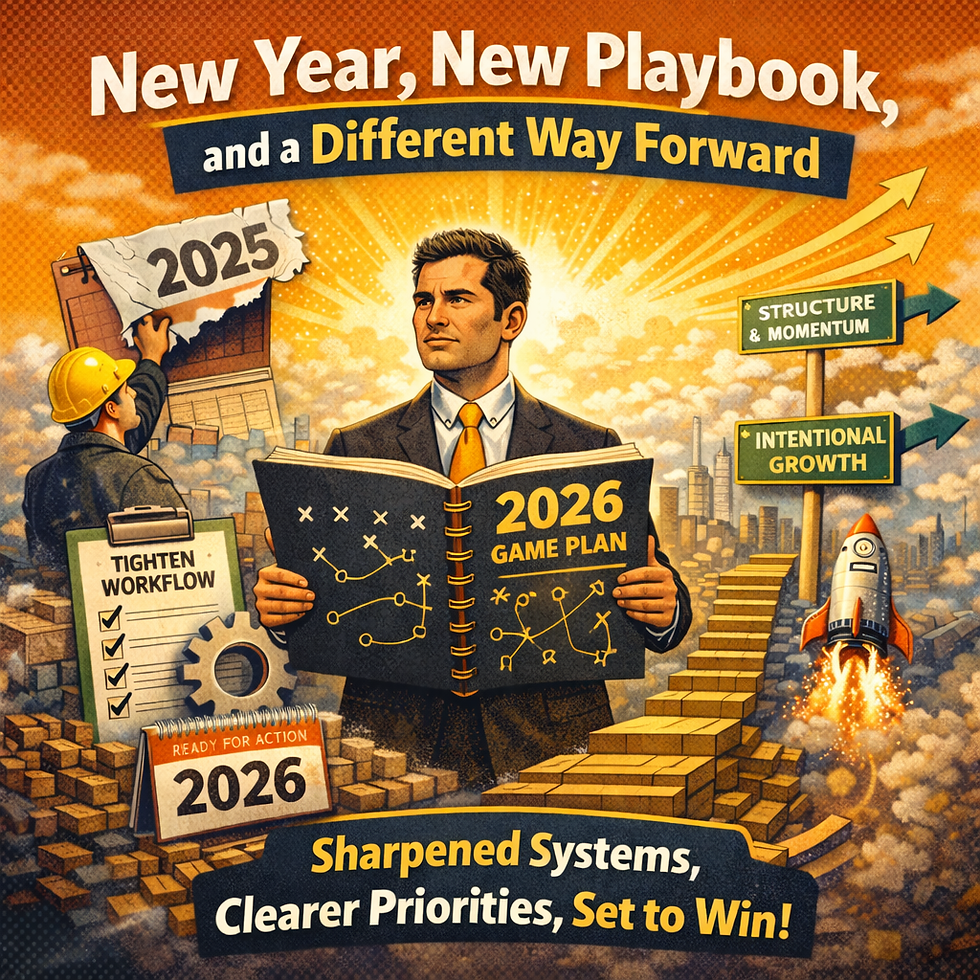
The guiding idea for 2026 is straightforward—New Year, New Playbook—and it’s not a slogan so much as a decision. The plan centers on seven meaningful shifts: upgrading client workflows, getting closer to builders, limiting flips to only obvious wins, actively courting buyers, showing up more intentionally on Zillow, mentoring agents with real substance, and creating content that makes room for humor without losing the hard data. It’s a different way forward, designed to feel calmer even when the calendar is full.
Rebuilding the workflow so scale feels calm
The first change is under the hood. Each client will move through a single, living workflow: every milestone, dependency, and deadline mapped in order. Past systems held up when travel was light and weeks were quiet; this year includes leadership commitments, monthly obligations, and a fuller pipeline. The answer isn’t more hustle—it’s smarter scaffolding. A comprehensive task board transforms “remember everything” into “follow the flow,” tightening handoffs and keeping transactions on rails when deals overlap.
There’s nothing flashy about a better checklist, but it’s the difference between sprinting and cruising. The show is trading mental overhead for visible steps, so service stays high even when the week doesn’t go as planned.
New construction, on purpose
Clients often begin with resale and end up in new construction once incentives, timelines, and pricing are laid side by side. That trend shaped last year; it will shape this one, too. The response is deliberate: lean into builder relationships—large, mid-size, and even smaller outfits doing production-style communities—so questions about lots, timelines, and expectations are answered early.
This isn’t boosterism; it’s alignment. When new construction is the better move, being there early and informed saves clients time and second-guessing. New Year, New Playbook means the research happens before the scramble, not after.
Flips only when the numbers sing
Volatility breaks flipping math. By the time a rehab is finished, the comps that justified the purchase can be months old and functionally irrelevant. Some past projects performed; others felt like a brawl with the calendar. One Piedmont-area house near Powdersville is wrapping—a no-HOA cul-de-sac 3/2 with a big backyard—and then the rule tightens: flip only when the spread is unmistakable.
The trade is sanity for certainty. If the numbers are pristine, great. If not, the energy goes back to clients with timelines right now. A calmer pipeline beats a riskier one.
Stop waiting—go find buyers
Referrals work, but they’re passive. This year carves out real time for proactive, repeatable buyer outreach. The logic is simple: in this market, buyers are often the lever. That doesn’t mean door knocking—there’s no appetite for that—but it does mean disciplined prospecting that lives on the calendar instead of the wish list.
There’s also a little milestone in the background: ten years in the business, with the anniversary just around the corner. A decade in brings perspective—what built the last ten years won’t necessarily build the next ten. So the plan evolves: clearer follow-ups, faster first touches, and a bias toward motion when the right home appears.
Zillow, but intentional
People look where people look. The goal for 2026 is straightforward: make the presence on Zillow honest, clean, and easy to verify. That means requesting more client reviews, surfacing listings with Zillow Showcase when it fits, and pairing those with 3D tours so shoppers can see enough to feel confident. The play stops short of buying leads; the focus is on visibility, clarity, and credibility.
There’s also a quiet housekeeping layer: aligning details so searches—whether typed, tapped, or spoken—land on accurate information without friction. Less mystery, more clarity.
Mentorship that actually helps
Growth this year isn’t about headcount; it’s about stewardship. The current team of three can add the right people, but the heart of the plan is hands-on help—contract coaching, due diligence troubleshooting, and that “call me when it gets weird” support that newer agents need the most. Those conversations already happen for agents outside the team; now they’ll be part of a formal rhythm with teammates who fit.
The payoff isn’t just internal. Better-supported agents do better work for buyers and sellers, and a steady bench keeps service consistent when the calendar gets loud.
Keep the insight—add the funny
Weekly episodes have always carried the stats, policy, and process. That won’t change. What will change is tone—giving space to genuinely funny content that earns attention from people who don’t live inside charts and acronyms. The guardrails stay in place: keep it useful, keep it human, and keep a modest buffer so Tuesday deadlines don’t crush creativity. It’s an experiment in widening the front door without losing what makes the show valuable.
Rest, reset, and rhythm
Underneath all seven shifts sits one quiet decision: build rhythm on purpose. The holidays delivered the rare, complete unplugging that most years don’t allow. That rest did its job. Coming back meant calendar blocks instead of wishful thinking, and Monday, January 5, became the first line in a schedule designed to hold—new client meetings, potential client conversations, and the day-by-day work that actually compounds.
The point of New Year, New Playbook isn’t novelty; it’s durability. When the personal calendar includes leadership travel and the professional calendar is full, structure is the edge.
An honest look at capacity
There’s also a clear-eyed acknowledgment that last year had moments that were simply too hard. Deals that should have been easy got complicated. The fourth quarter felt heavier than it looked on paper. That reality shaped this year’s choices: fewer time drains, more systems that protect attention, and work aligned with what’s actually happening in the market—like a meaningful tilt toward new construction when it solves real problems for buyers.
What clients can expect
For buyers: faster starts, cleaner workflows, and earlier clarity on whether new construction or resale truly fits. For sellers: a steadier cadence of communication and a more predictable process, even when a week throws curveballs. For both: more candid conversations about timing, comps that matter, and the tradeoffs that follow each route.
In short, New Year, New Playbook isn’t theory; it’s what the day now looks like.
Watch Or Listen To The Selling Greenville Podcast
Subscribe to the Selling Greenville podcast for real-time insights, bold perspectives, and unfiltered takes on the Upstate housing scene. Whether you’re buying, selling, or simply watching the market unfold—this is where Greenville goes to stay informed.
Bottom Line
A different year demands a different rhythm. The plan for 2026 is practical by design: one workflow per client, better builder intel, flips only when the math is obvious, proactive buyer outreach, intentional Zillow presence, mentorship with real substance, and content that leaves room to laugh. New Year, New Playbook isn’t about being busier—it’s about being clearer, calmer, and more effective when it counts.
Ien Araneta
Journal & Podcast Editor | Selling Greenville


Comments