


Basement Homes are Extremely Undervalued. Thanks, Appraisers
Basements have a branding problem—and it isn’t about damp concrete or cobweb myths. It’s about how value gets measured. In this fiery, data-sprinkled episode of Selling Greenville, the host lays out a case that finished basement square footage—when built and finished to the same standard as the main level—routinely gets shortchanged at appraisal. The lived experience, the market behavior, and even a quick pass through MLS metadata all suggest something different: buyers see a lot more value than the typical report reflects.
What follows isn’t theory. It’s a Greenville-grounded walk through how appraisers commonly handle below-grade space, why that clashes with how real buyers use and prize those rooms, and what the local sales numbers quietly reveal.

Basement homes are extremely undervalued
Let’s name the pattern plainly: basement homes are extremely undervalued when appraisals default to a 50% credit for finished, heated, below-grade living area—no matter how closely it matches above-grade finishes. That “half credit” shows up again and again in real files, including on properties where the lower level carries crown molding, drywall ceilings, quality flooring, proper windows, and conditioned air—i.e., functionally indistinguishable living space.
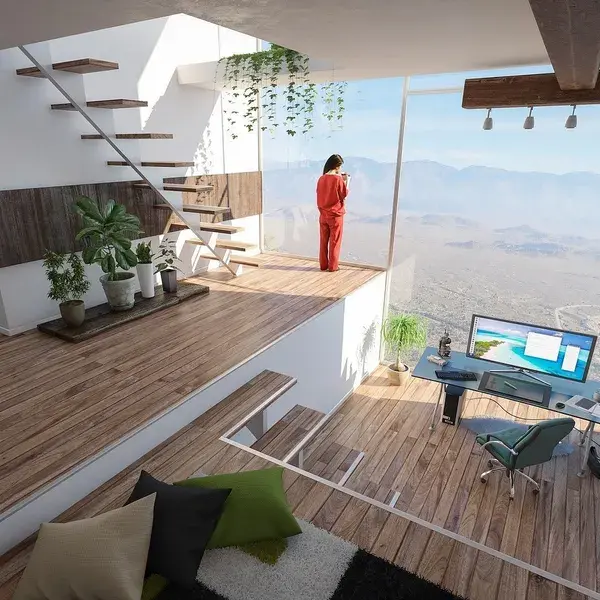
The lived reality: buyers prize good basements
This isn’t abstract. In one Greenville neighborhood with few finished basements, a fully built-out lower level—office, game room, guest suite, movie room—turns heads every time neighbors come downstairs. It’s not “extra storage”—it’s a second life to the home. Tornado warnings? There’s a safe spot with real walls. Movie night? Better in a darker, quieter space. Walkout convenience to the backyard? Priceless. Even maintenance gets easier—pressure washing and roof access without 25-foot ladders.
Now flip the thought experiment: take a 3,000-square-foot home with two levels. If that second level lives above the main floor, almost no one blinks. Shift that same second level below the main floor—same square footage, same finishes, heated and cooled—and suddenly the spreadsheet says “half as much.” Buyers don’t think that way. They want a ranch, or they want a ranch-plus—a real lower level that lives like a second story, not a tacked-on afterthought.
“Show me the data.” Fine—here’s the quick-and-dirty
Isolating apples-to-apples is harder than it sounds because of how the local MLS stores basement details. Price-per-square-foot calculations typically exclude below-grade space entirely, and sold reports don’t show the specific percentage credit an appraiser gave the lower level. That means any broad query has one hand tied behind its back.
Even so, a rough pass through recent fully finished basement sales versus similarly configured homes without basements (minimum four bedrooms and three full baths) turned up telling differences:
Basement homes averaged ~4.05 bedrooms and ~2.91 full baths, with an average sold price around $335,500, and an average of 62.4 days on market.
Non-basement comparables skewed a bit “bigger” on paper—~4.43 bedrooms and ~3.16 full baths—but still averaged a lower sold price, fewer concessions (~$331,000), and sat about a week longer before going under contract.
It isn’t a peer-reviewed study; it’s a directional pulse. But if the “basement discount” truly reflected market preference, the non-basement group—larger by bedroom/bath counts—should have stood out as stronger. Instead, basement homes held price and moved faster.
Why appraisals diverge from the market’s gut
A few reasons pop up again and again:
Lender risk posture. Appraisers primarily serve the lender’s need to collateralize a loan. After the 2008 debacle, standards tilted conservative. A simple, defensible rule (50% for below-grade) is easier to justify across files than a nuanced, finish-by-finish analysis—especially when loan investors expect uniformity.
Neighborhood norms. In metro areas where “every home has a full, luxury basement,” below-grade space sometimes prices closer to parity. Greenville is different: fewer basements overall, lots of slab production builds, and tri-levels that fell out of fashion. That lack of like-kind comps pushes appraisers back to formulas
Build-cost arguments. Some appraisers note it’s cheaper to add space below grade than to frame another story, so the “cost” undercuts the “value.” But markets pay for usefulness, not invoices. If a walkout rec room lives better than an upstairs bonus room, usefulness wins at the showing—even if the spreadsheet disagrees.
“If buyers value it, they’ll bridge the gap.” Not so fast
One response heard in the professional back-and-forth: if the market truly values basements more than the appraisal, buyers can simply bring a bigger down payment to cover the gap; repeated sales will reset the comps. In reality, that holds basement homes to a higher standard than everything else. It’s asking ordinary households to overfund equity—again and again—just to teach the valuation system what showing feedback already knows. Cash solves any appraisal problem, sure, but telling an entire segment to “just pay cash” isn’t a real-world fix.
Builders, basements, and the Upstate lot puzzle
If there’s demand, why don’t national builders flood the zone with basements? Two Greenville truths:
Lots and topography. The area has hills, but large tract developments trend flat enough (or get graded flat enough) that basement-friendly lots are the exception.
Production rhythm. Big builders standardize: slab foundations, repeatable plans, quick cycle times. Basements complicate schedules and margins. The result isn’t a lack of demand; it’s a supply machine optimized for speed.
Years ago, tri-levels and split levels made modest use of slope. Today, those plans are rarer—another reason true basement comps are scarce.
The MLS blind spot that muddies the conversation
Locally, the MLS calculates price per square foot from above-grade area. It doesn’t show how a given appraiser credited the basement, and the “Full Finished Basement” flag lumps a lot of variability—from drywall ceilings and hardwoods to tile grids and budget flooring—into one checkbox. That makes any high-level query a grayscale picture. But even within those limitations, the results didn’t support the idea that basements are categorically “worth less.”
How to think about valuation if you’re buying or selling one
Expect appraisal friction—plan for it. When a finished basement truly matches the main level, understand that the appraisal may still reflect a 50% credit. Build that into strategy, not because it’s “right,” but because it’s likely.
Remember who the appraisal serves. It’s a loan tool, not a referendum on joy or utility. The market—the humans walking through the space—assigns value differently.
Document finish quality. The closer the finishes match (flooring, ceilings, trim, windows, HVAC), the stronger the narrative case. It won’t guarantee parity, but it’s the best argument the file can carry.
Watch Or Listen To The Selling Greenville Podcast
Subscribe to the Selling Greenville podcast for real-time insights, bold perspectives, and unfiltered takes on the Upstate housing scene. Whether you’re buying, selling, or simply watching the market unfold—this is where Greenville goes to stay informed.
Bottom Line
Across showings, neighborhood chatter, and quick-cut stats, one theme repeats: basement homes are extremely undervalued on paper compared to how people actually live in them. The 50% rule is tidy, but it’s not true when the lower level genuinely mirrors the main floor. In Greenville, where true basement comps are rarer ,and production building favors slabs, that mismatch shows up more often. Until the pipeline and the data catch up, expect the market to keep rewarding high-quality basements—and expect the spreadsheet to trail, not lead.
Ien Araneta
Journal & Podcast Editor | Selling Greenville


Comments